Great Egret
Ardea alba



Its four subspecies live in Asia, Africa, the Americas and southern Europe.
How to tell it apart
- Yellow bill
- Black legs
- Long legs
Facts
- Size
- Length: up to 36 in (91 cm). Wingspan: 4.3–5.6 ft (1.3–1.7 m).
- Weight
- 1.5–3.3 lb (0.7–1.5 kg).
- Where it lives
- Found across much of the world.
- What it eats
- Eats small water animals, reptiles, frogs and fish.
- Behavior
- Usually seen in or near water.
Where to see it
The Great Egret is in these 12 guides:
- Acadia Pro Few visitors see it.
- Everglades Pro
- Algonquin Pro
- Australian Outback Pro
- Birds of Britain and Ireland Pro
- Birds of Central Europe Pro
- Birds of the Pacific Northwest Pro
- Chicago Pro
- Eastern Australia Pro
- Finland Pro
- New York Pro
- Yucatan Pro
Animals it can be mistaken for
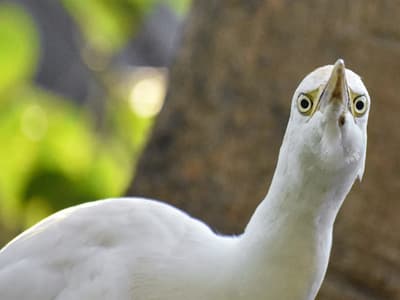
Eastern Cattle-EgretArdea coromanda 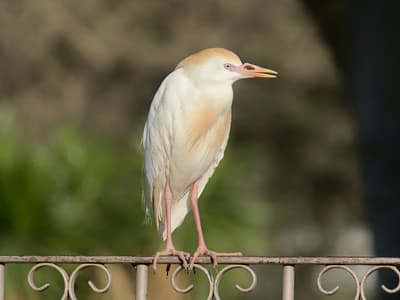
Western Cattle-EgretArdea ibis 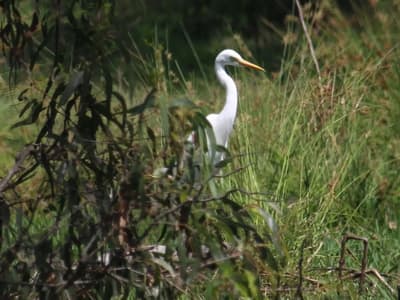
Plumed EgretArdea plumifera 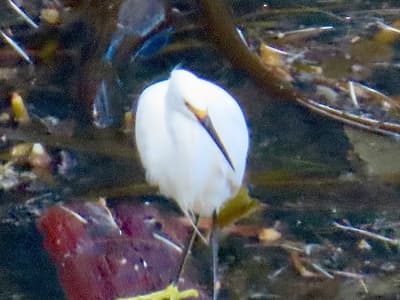
Snowy EgretEgretta thula 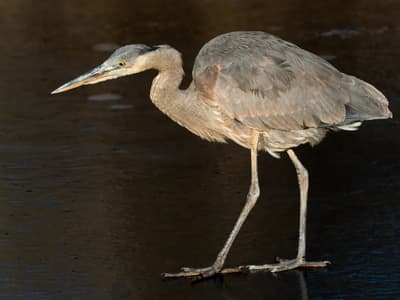
Great Blue HeronArdea herodias
Find animals like it
- Birds with a yellow beak in Acadia National Park
- White birds in Acadia National Park
- Birds of Acadia National Park
- Herons and egrets of Acadia National Park
- Large white birds in Everglades National Park
- Large white birds in the Australian Outback
Identify it with the Acadia guide Pro
The Acadia guide has the Great Egret and 265 other animals, with photos you can compare. Tap or type what you saw and it lists the closest matches. Save it on your phone and it works with no signal. It costs $9.99 once, or $99 once for every guide.